Elefant Toy
This project explores how the quality of “cuteness” in delightful design can be incorporated into a children’s companion toy. The Elefant Toy is a three-piece wooden elephant puzzle designed for children ages 2~3. Through its playful form and simple interactions, Elefant aims to encourage imaginative play while creating a sense of delight and companionship.
Material: Hard Maple
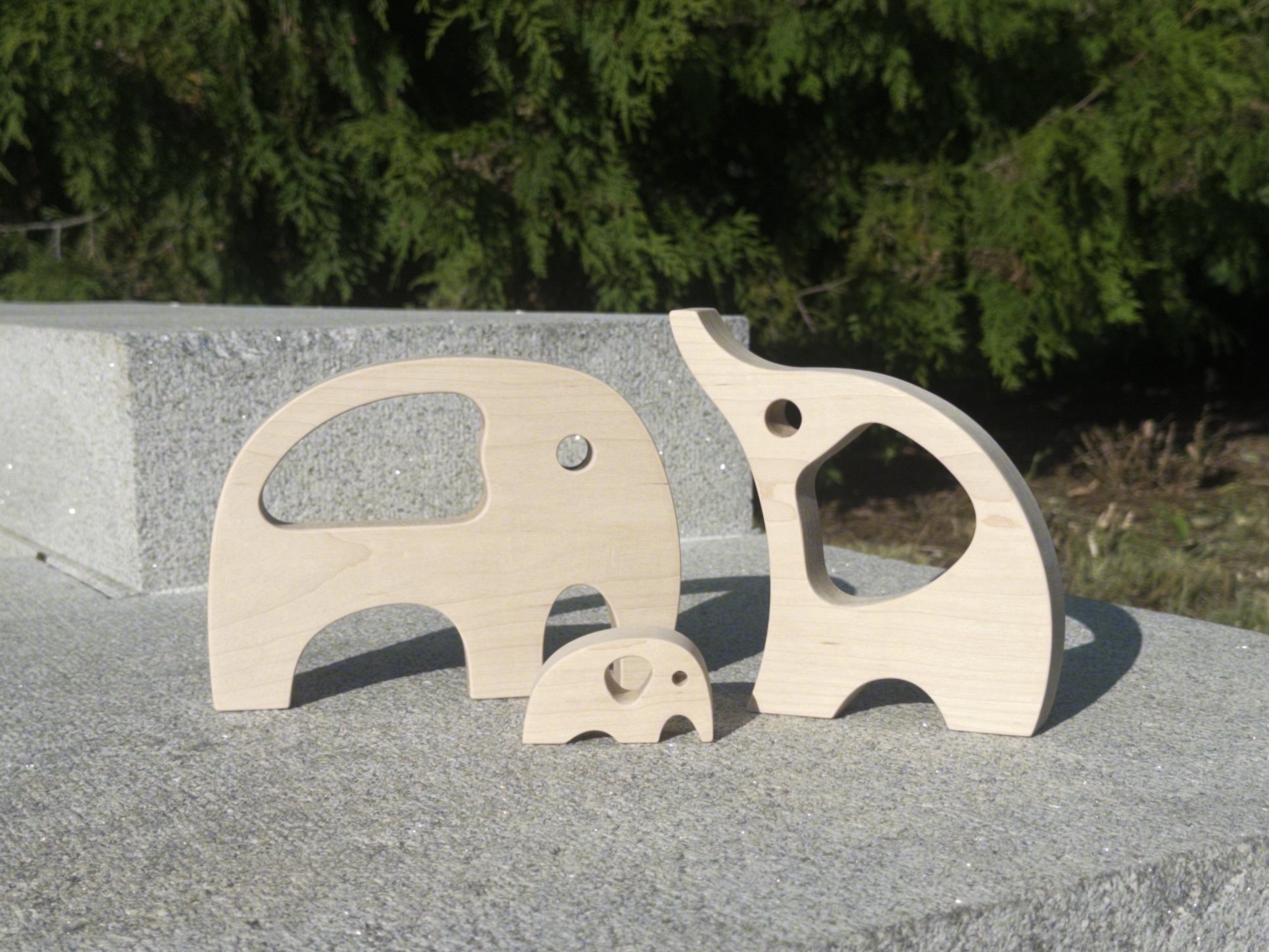
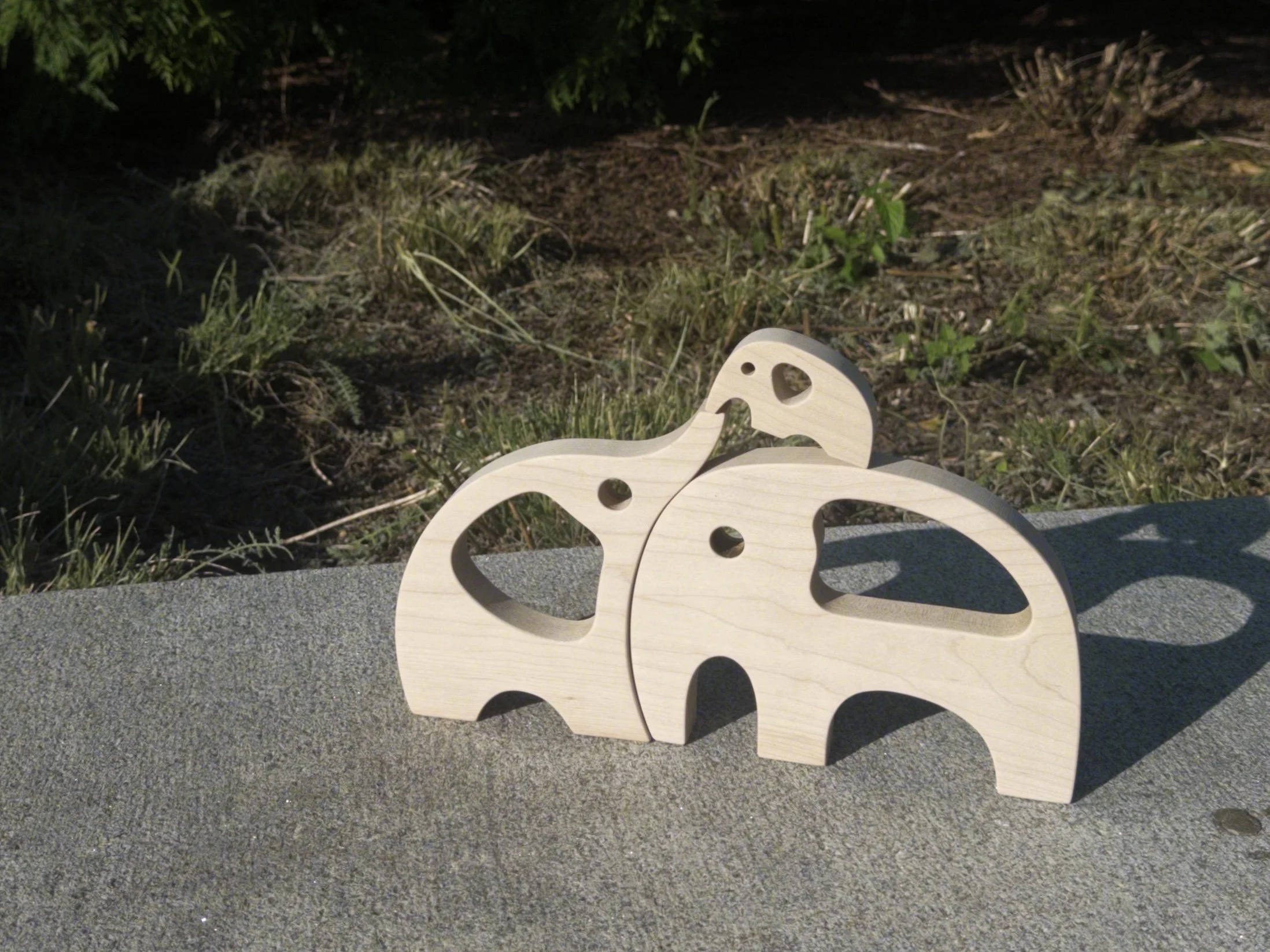
What is delightful design? It is an approach to create products and experiences that bring joy and positively connect with people. Delightful design can be explored through six experiential qualities: engagement, surprise, liveliness, cuteness, serendipity, and reassurance.
For this project, we were challenged to explore cuteness through the design of a children’s toy. I was curious about how simple shapes and playful interactions could create a sense of delight and companionship.
Let’s discover the delight together.
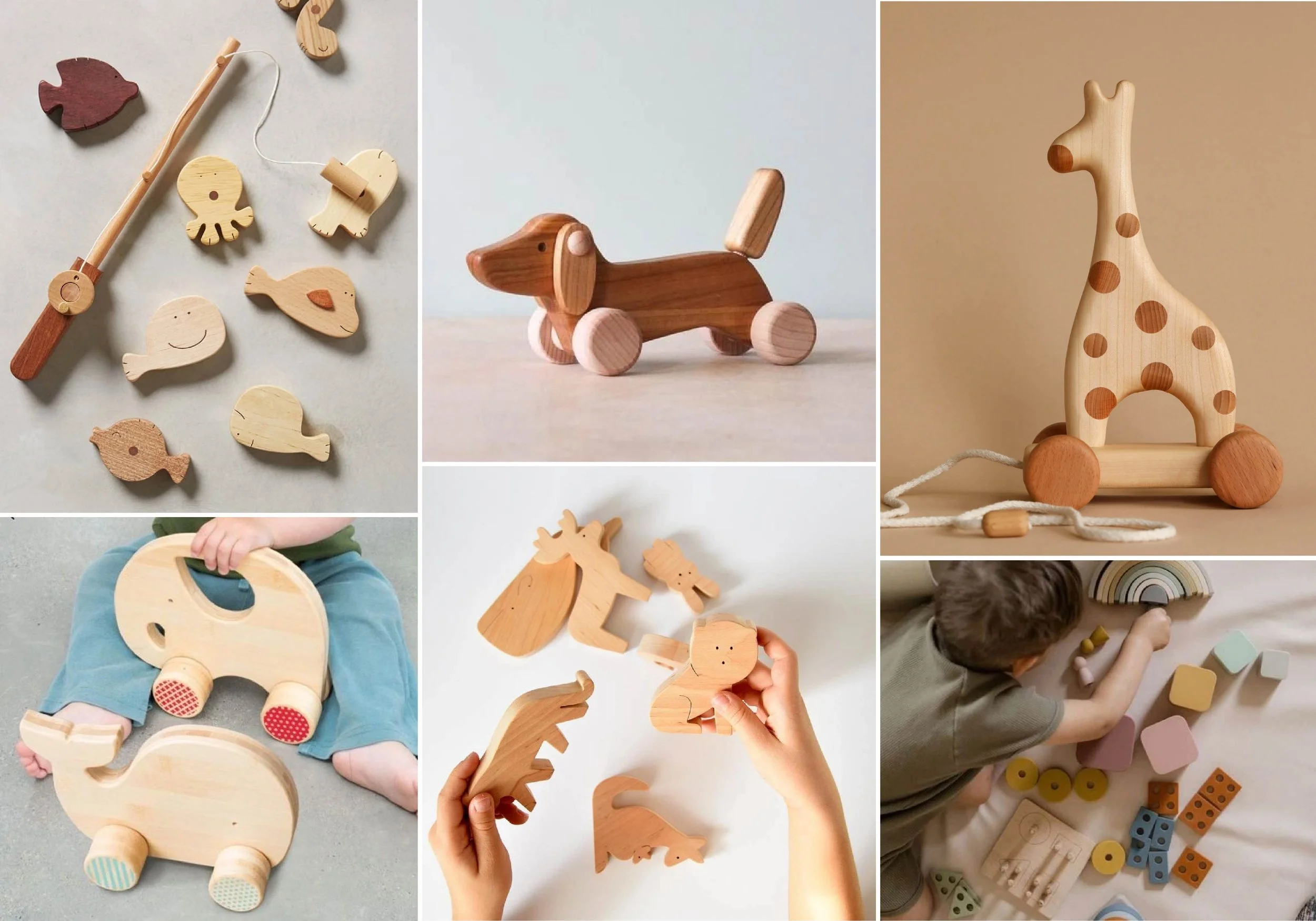
01 — Inspiration Board
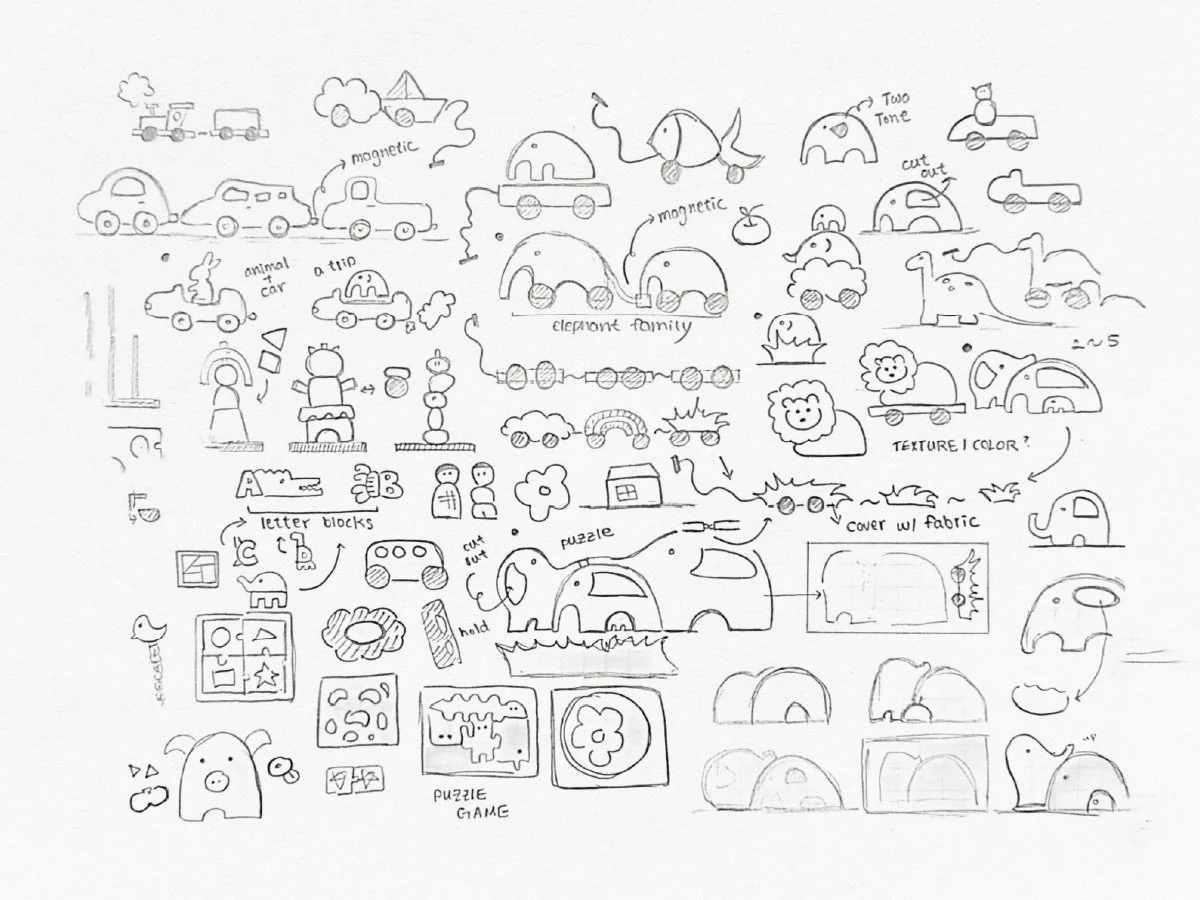
02 — Ideation
Ideation Sketches
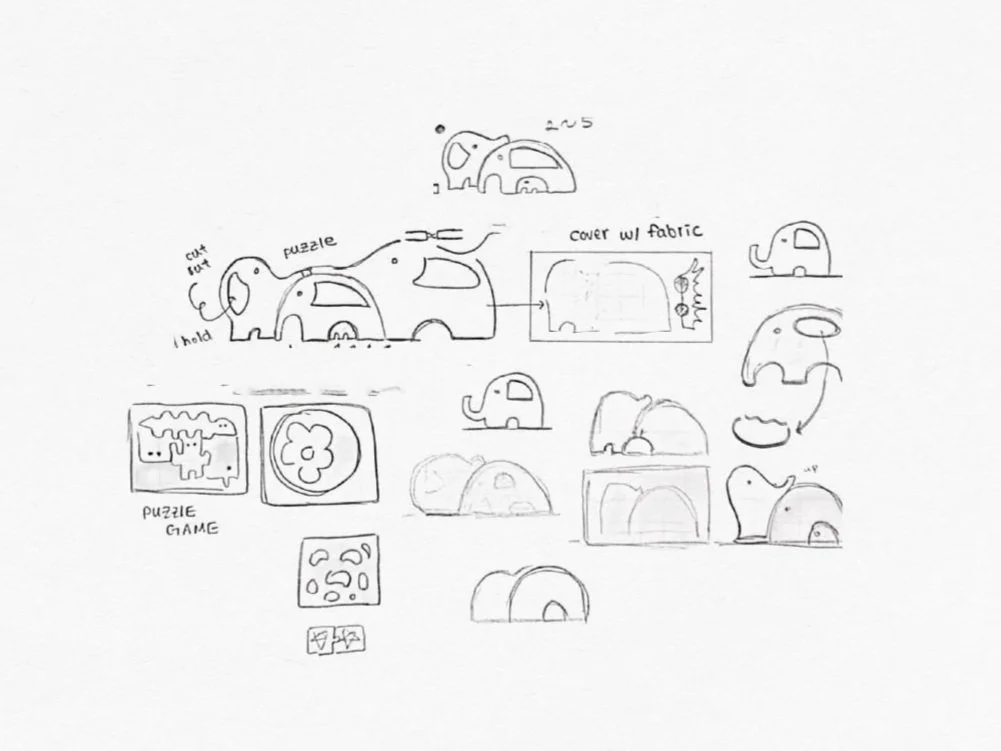
Finalized Direction: Elepant Puzzle
Building on my inspiration board, I started sketching out different toy ideas. A lot of my sketches focused on an elephant family because I love elephants. But beyond that, elephants naturally live in close-knit herds where they care for and protect one another. I also noticed that this same sense of family is often shown in children’s books, which inspired me to bring that feeling of love and playfulness into my toy design.
I ended up choosing Direction 1 because I felt its overall form captured the idea of an elephant family best. Beyond imaginative play, I also liked how the puzzle function could encourage children to develop problem-solving skills and hand-eye coordination as they figure out how the shapes fit together.
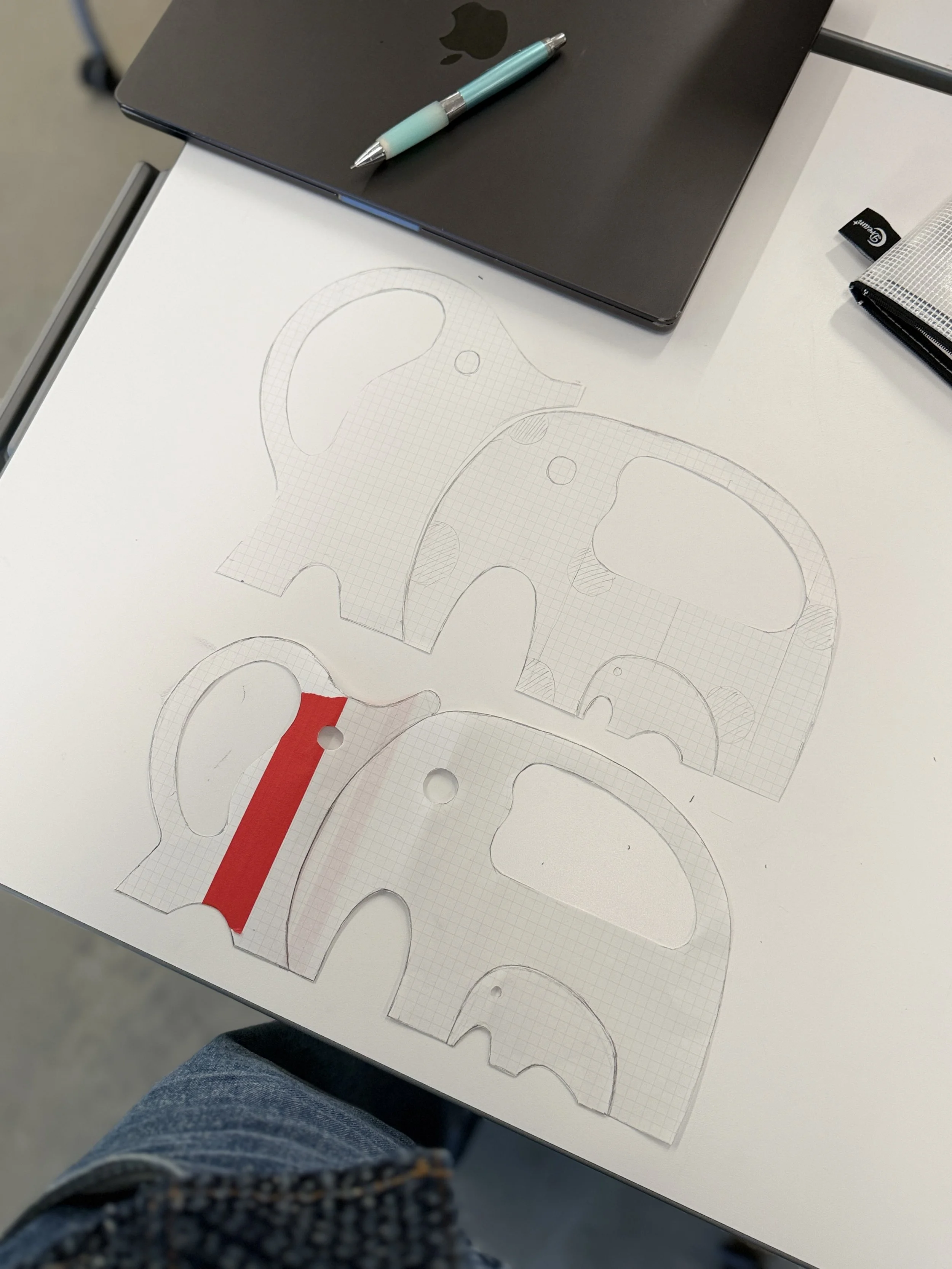
03 — Prototyping
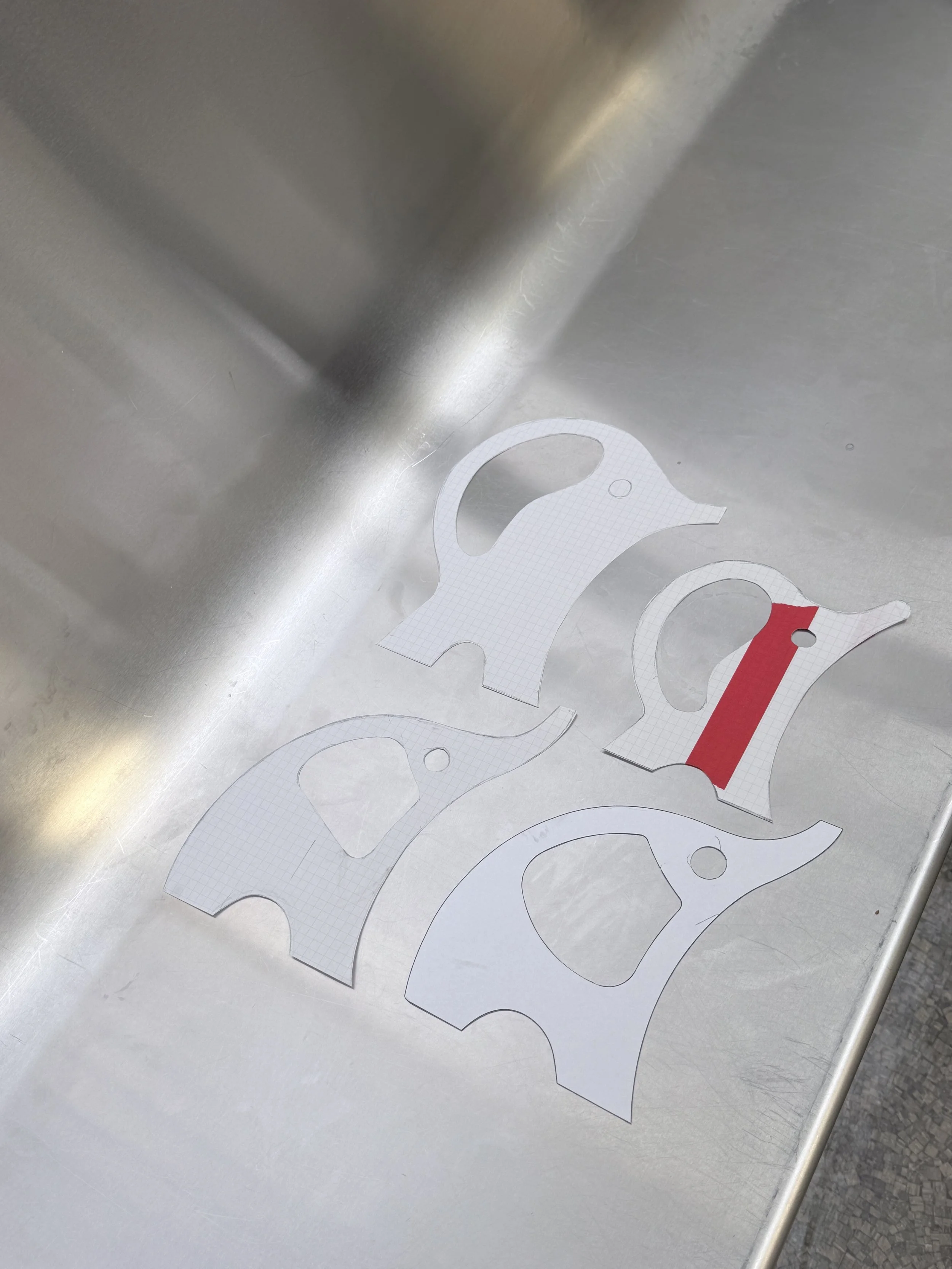

I went through about four rounds of iterations, focusing mainly on the elephant on the left.
Finding a shape that was recognizable as an elephant while fitting the overall flow of the design took several attempts. To help refine the shape, I looked at photos of standing elephants to better understand their proportions.
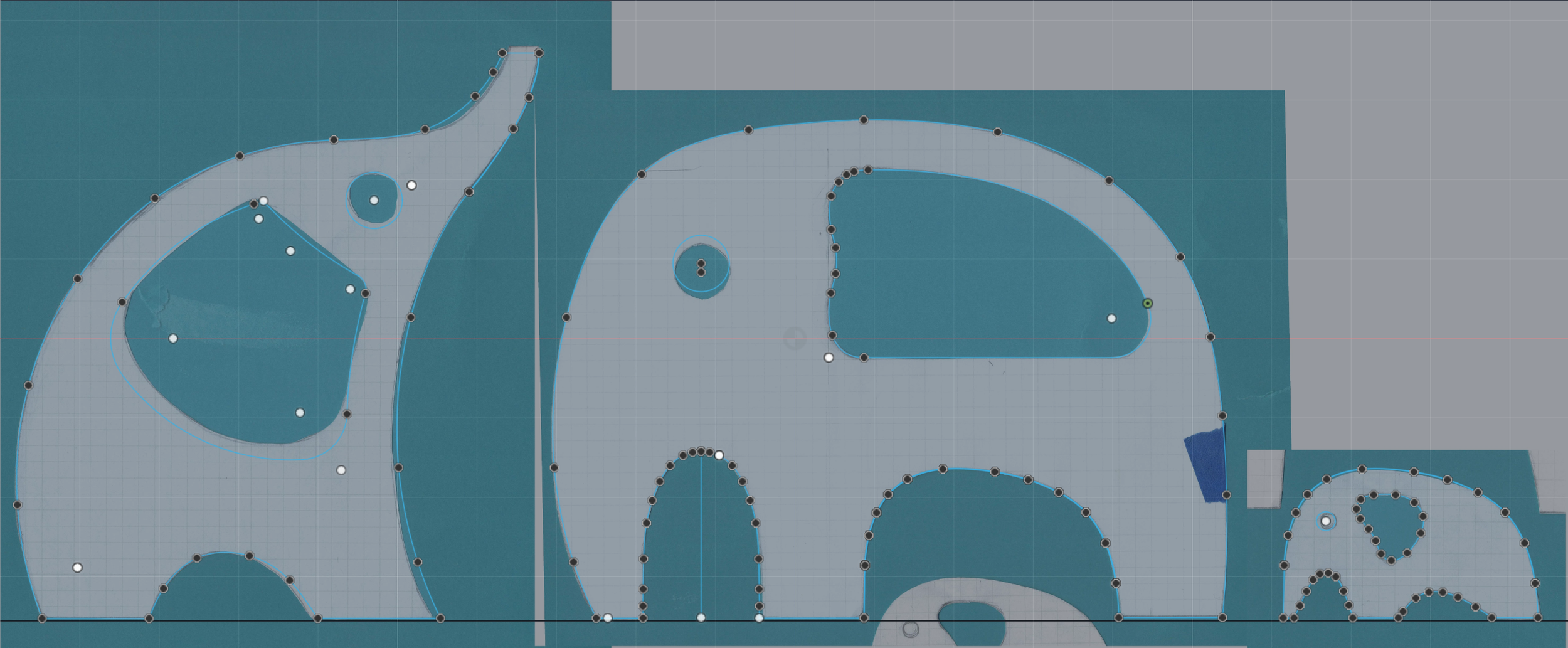
04 — Form Refinement
I then brought my finalized low-fidelity prototype into Fusion 360 to make a few more tweaks to the shape. I adjusted some of the corners to work with the radius of the benchtop sander so it would be easier to make in the woodshop.
Once I was happy with the design, I printed and cut out the elephant templates before heading into the wood shop to make the final pieces. I love working in the wood shop, so I was excited to bring the design to life. However, even with these simple shapes, I ran into a few challenges along the way.
Let’s take a look at what happened!
05 — In Woodshop
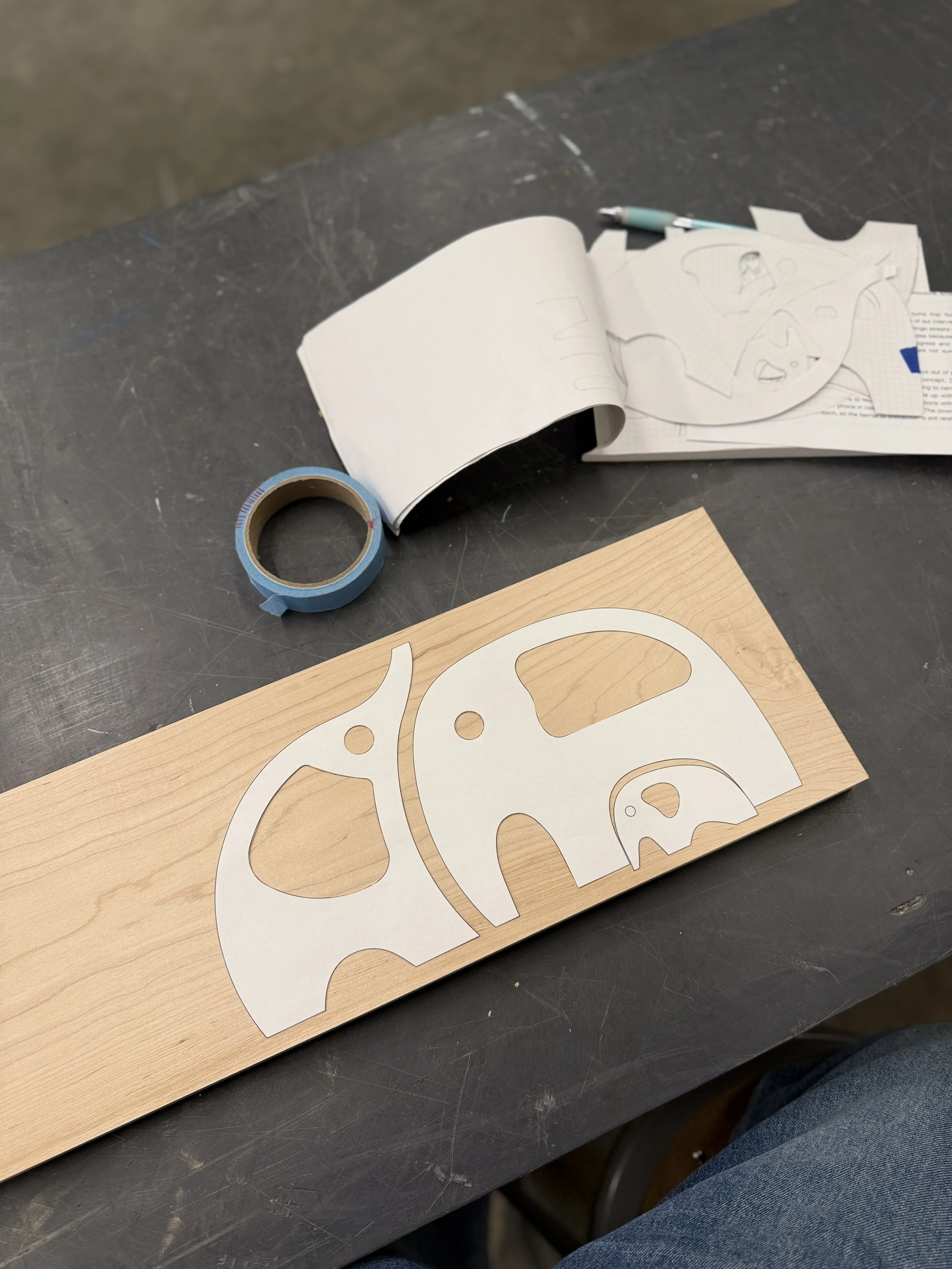
Tracing the stencil onto wood
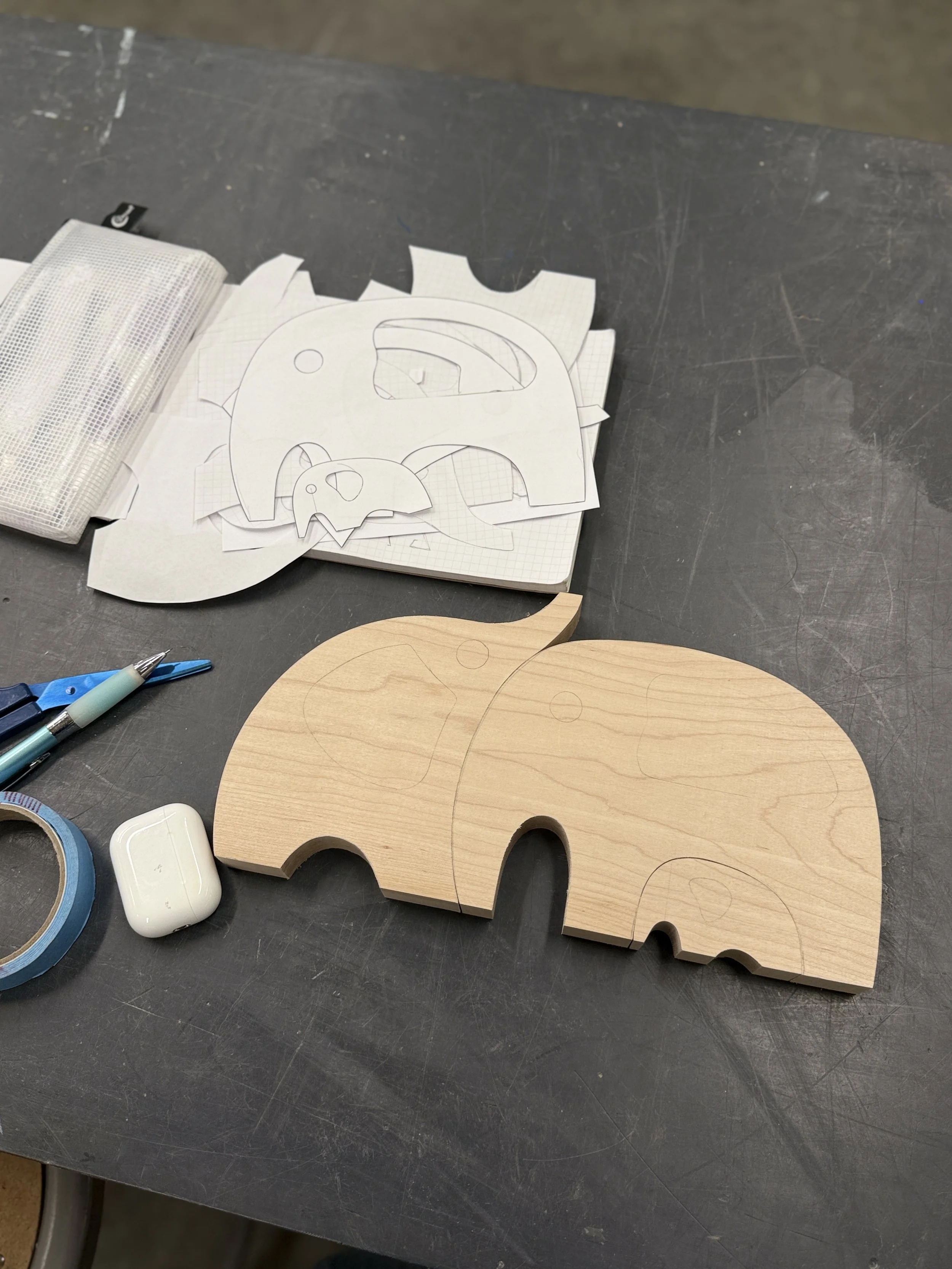
Rough cutting the shape with a bandsaw, then sanding to refine the shape
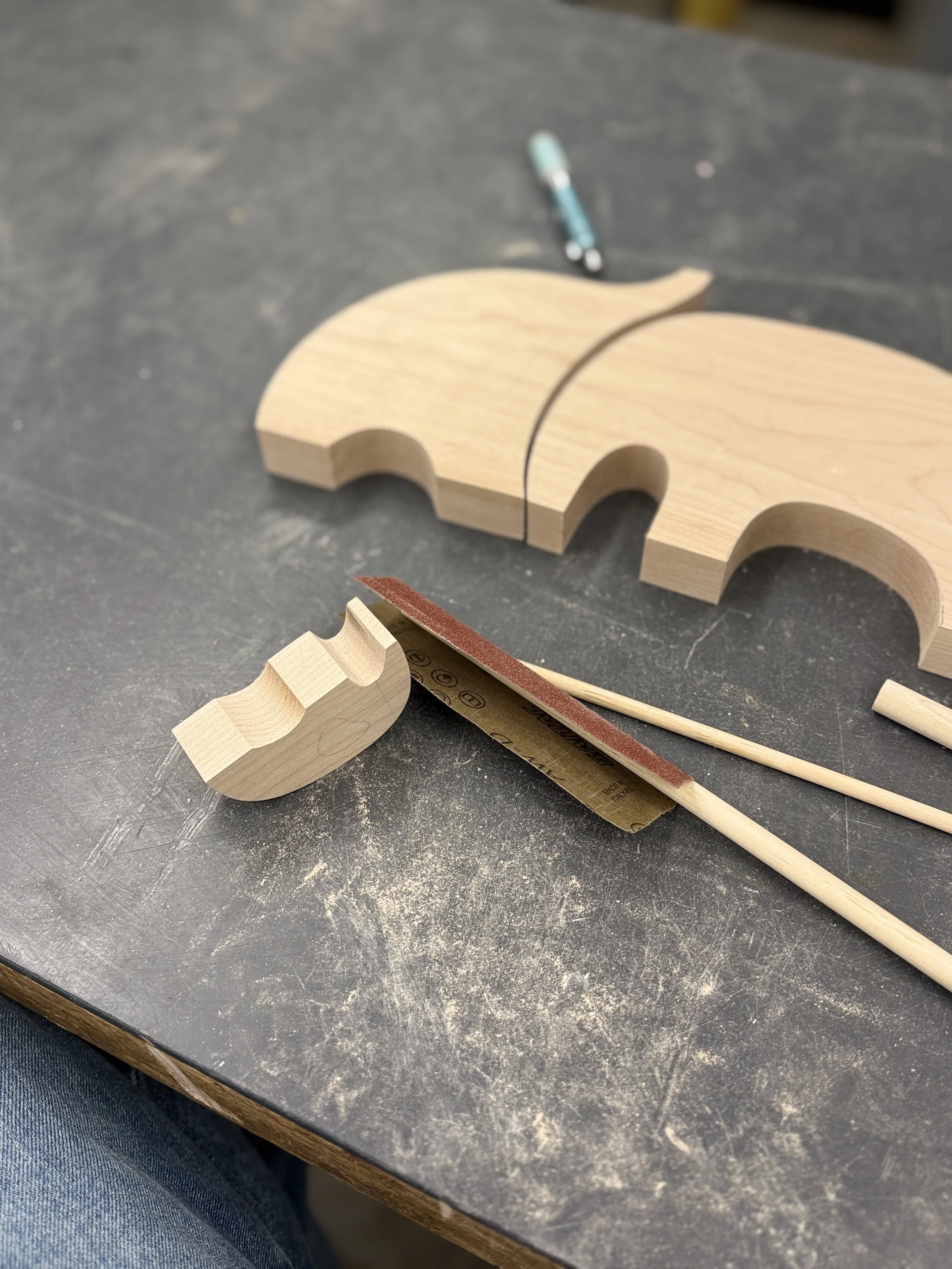
Hand sanding smaller corners that the power sander can't reach
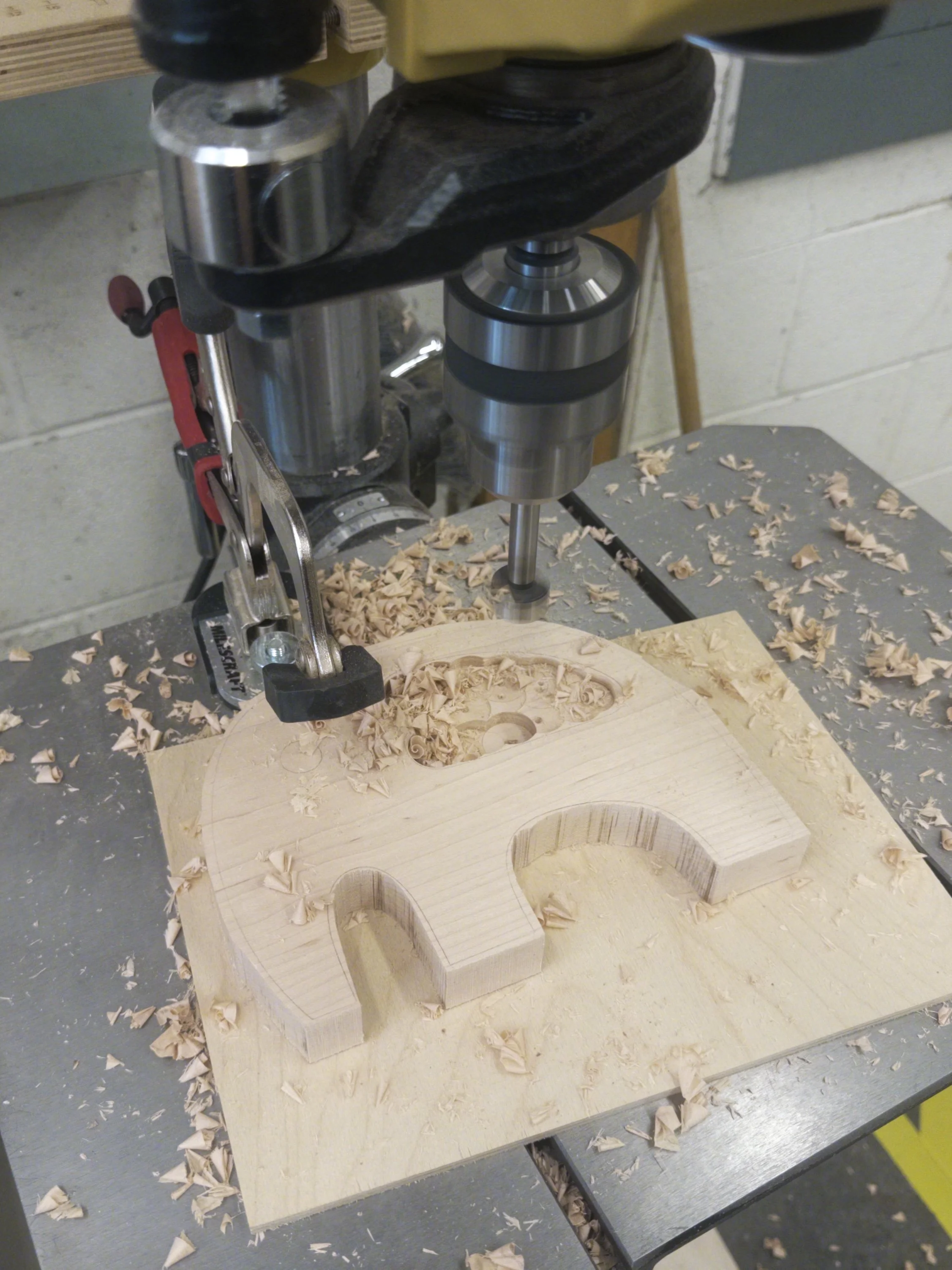
Creating the ear cutouts with a drill press, then refining the edges with a benchtop sander
Challneged Faced
I ran into some trouble using the router because the smallest bit was ⅛ inch, which was too large for my toy. Since the pieces were small, they couldn’t sit flat against the router table. This caused the router to cut at an awkward angle and burn the wood.
So, I decided to sand the edges by hand.
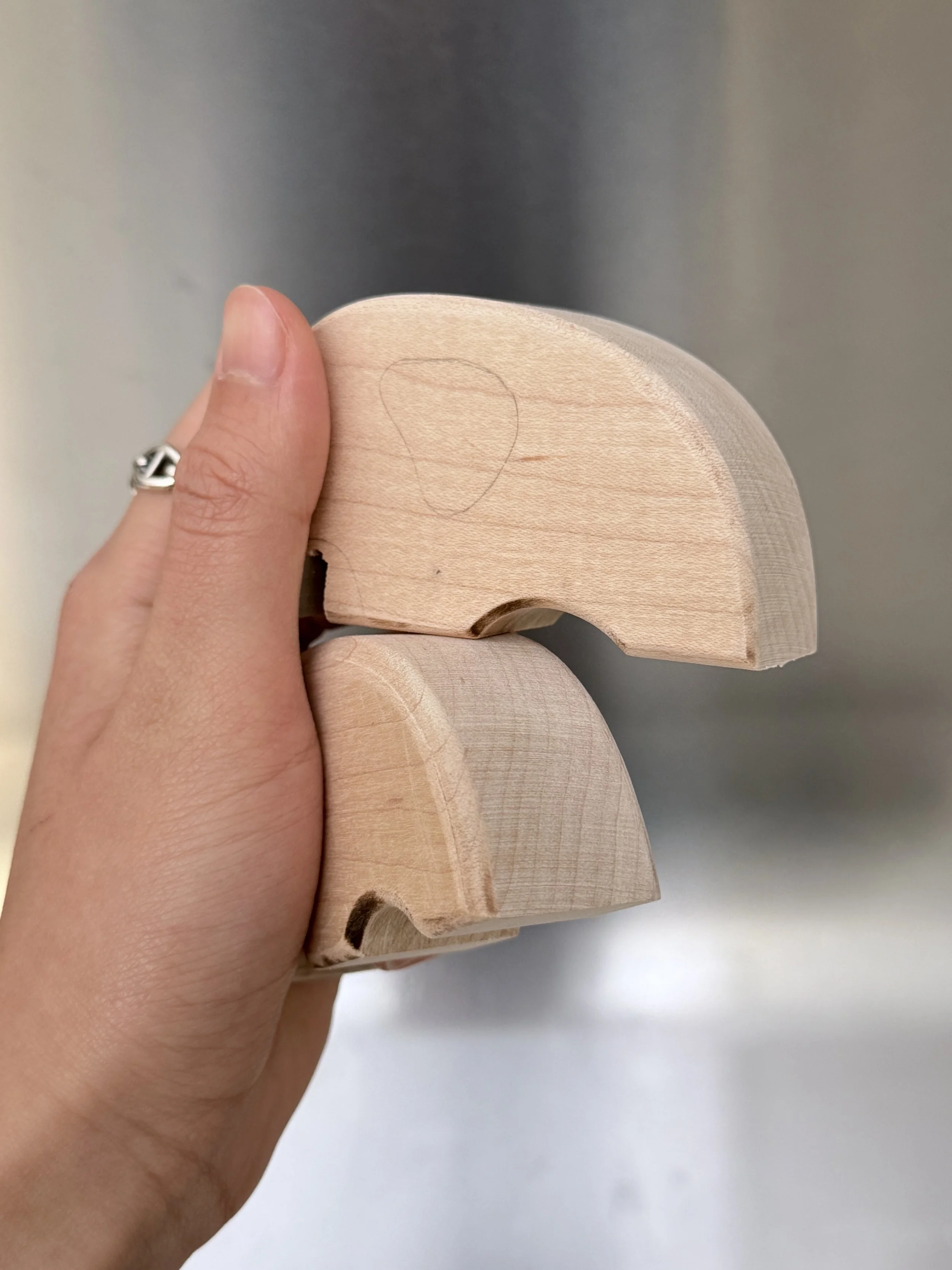
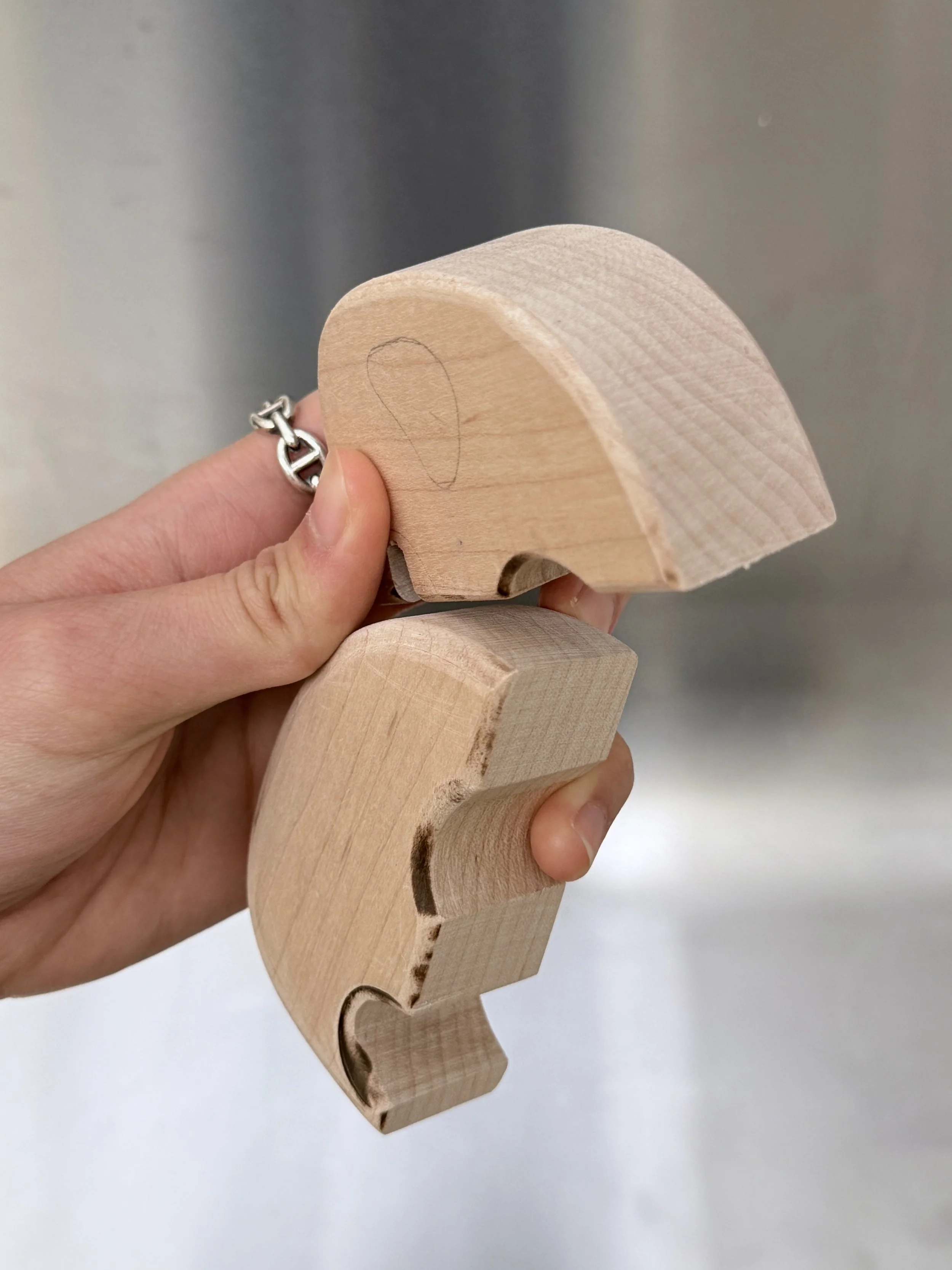
A Timelapse of Me Sanding…
The whole sanding process ended up taking about three hours. Definitely need to figure out a better way next time!
I never expected such simple shapes to take so much time and effort to make. This definitely made me appreciate simple designs a lot more. People often say that the simpler a design looks, the harder it is to make, and I really felt that throughout this project.
But at the same time, I love how simple the final design is. I can imagine it being more than just a children’s toy. For example, making it out of metal could turn it into a decorative object.
This project taught me a lot about designing with fabrication in mind. Moving forward, I want to be more careful with my design decisions and figure out what tools I’ll be using earlier in the process so I can design around their limitations.
06 — Reflection