Interwoven
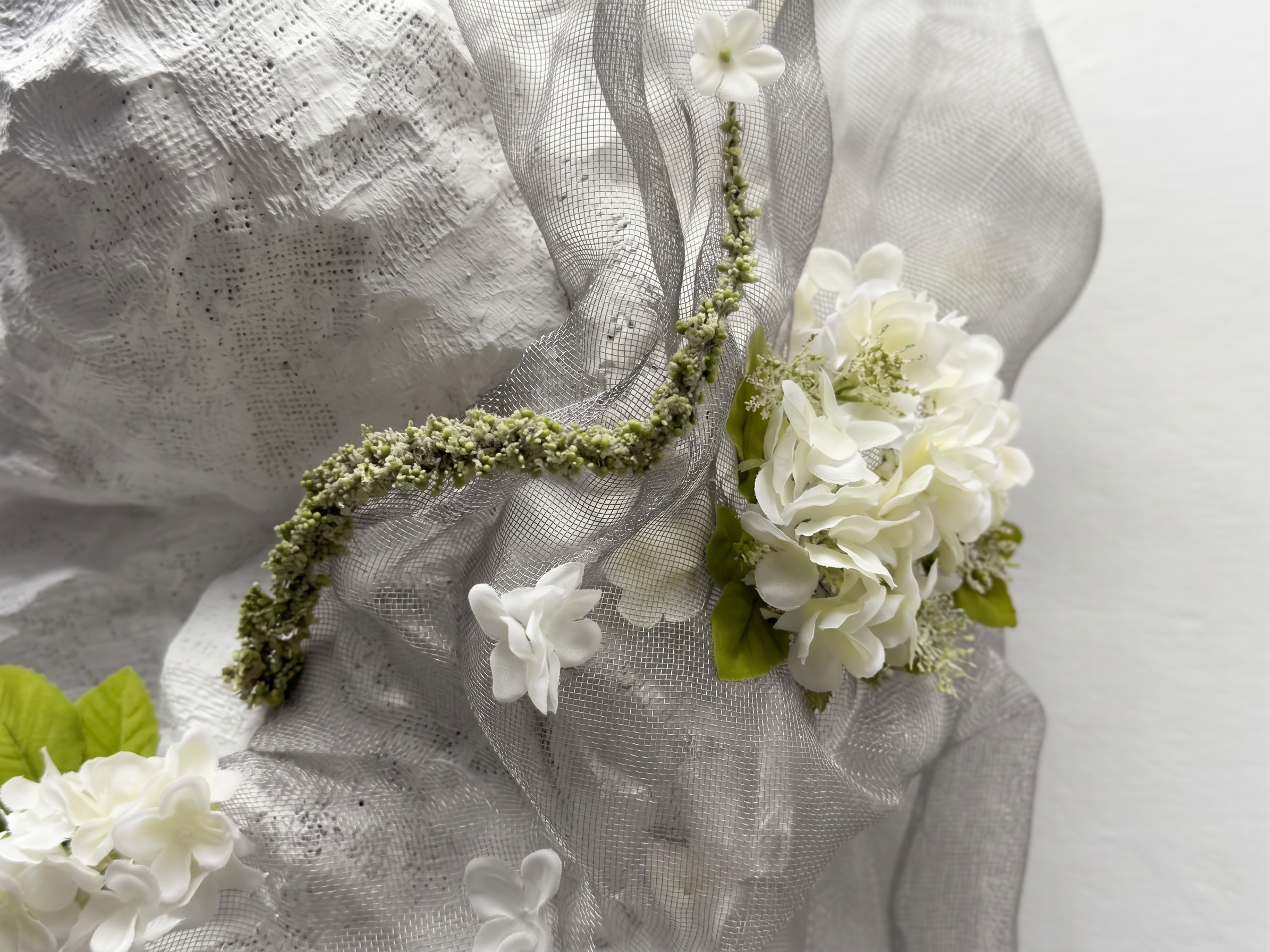
This project explores the relationship between texture and light through a wall sculpture. The name Interwoven reflects how plaster, mesh, and floral elements overlap and connect throughout the piece. The rough plaster creates variations in light and shadow, while the translucent mesh wraps around the form, creating soft folds and layers of transparency. White flowers and green stems trace the curves of the mesh, guiding the viewer’s eye across the sculpture and emphasizing its movement.
Materials: Chicken wire, plaster, wire mesh, artificial flowers
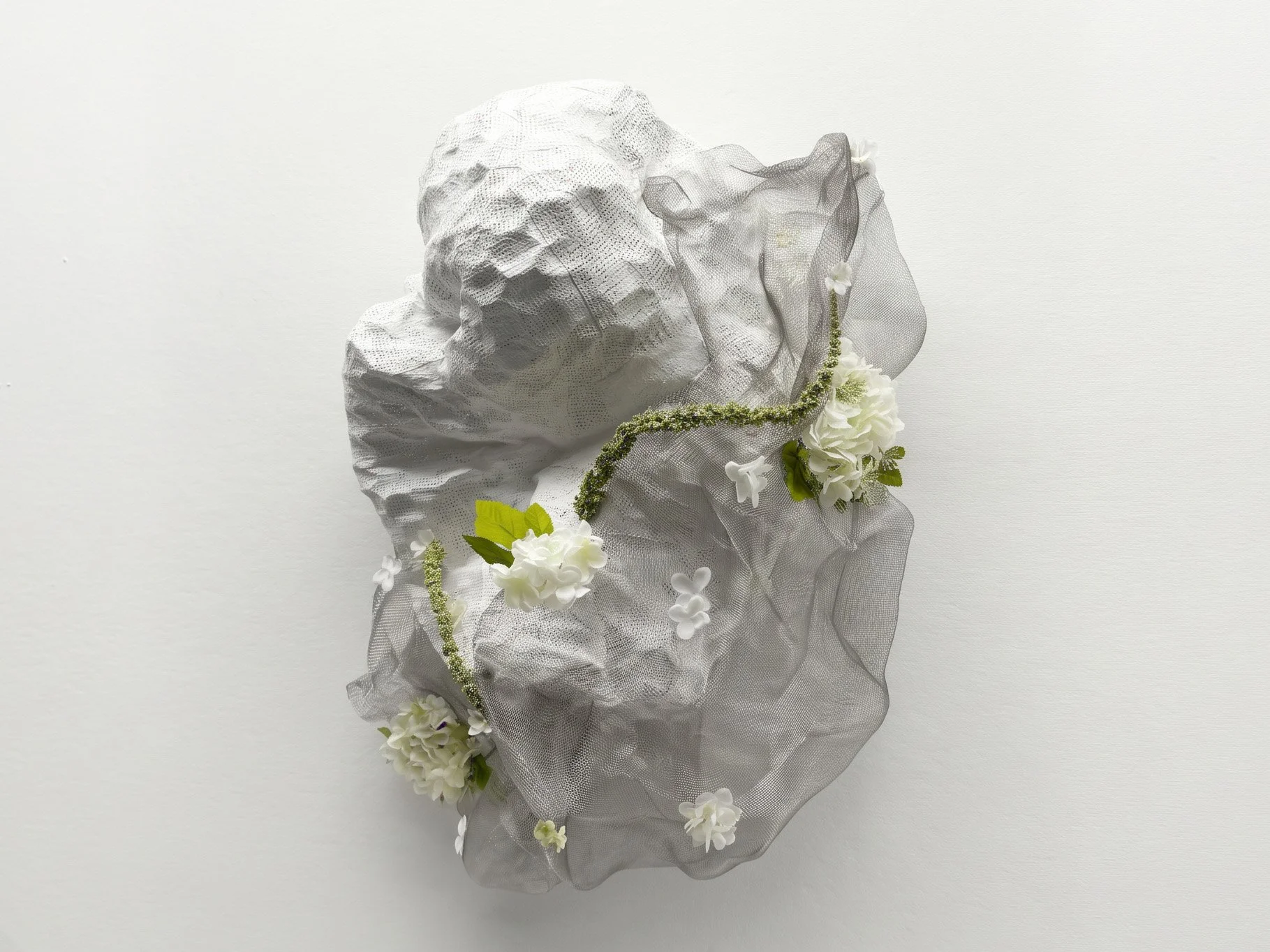

I have always enjoyed combining different materials to create beautiful forms. So when I was challenged to create a sculpture using chicken wire, plaster, wire mesh, and artificial flowers, I was excited to experiment and see what I could create.
This led me to ask: How can I bring these materials together to create a form that explores texture, light, and depth?
Let’s step into this interwoven world and see how the project unfolded.
01 — Inspiration Board
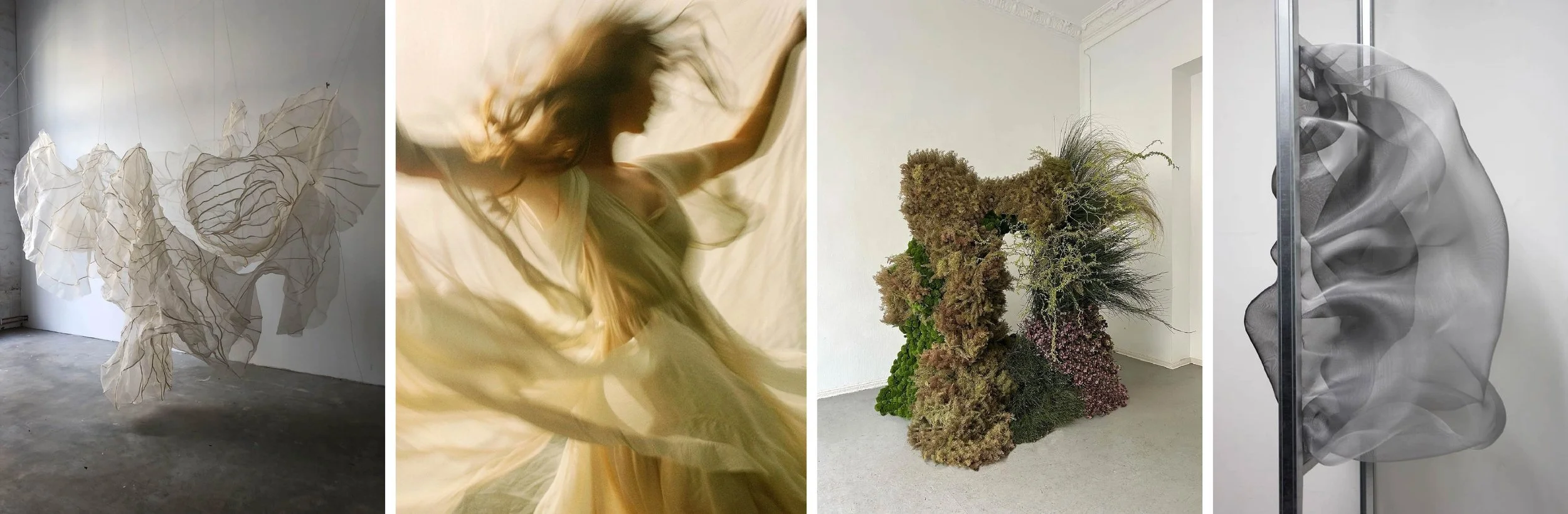
With a mostly neutral color palette and flowers as part of my materials, I looked for inspiration in airy flowing forms and organic sculptures. I was especially drawn to how translucent layers create movement and how plants can become part of a sculptural form.
02 — Texture & Color Study
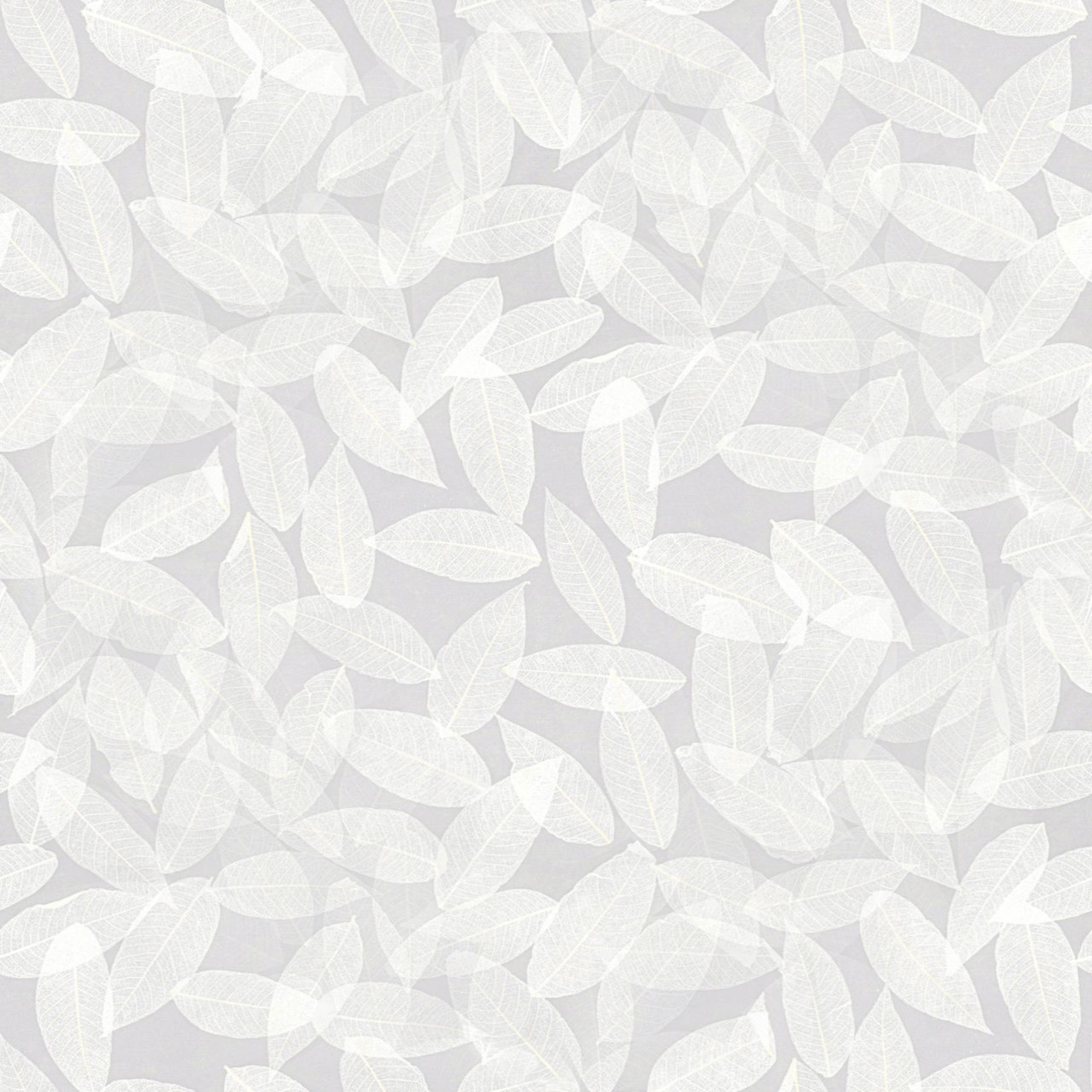
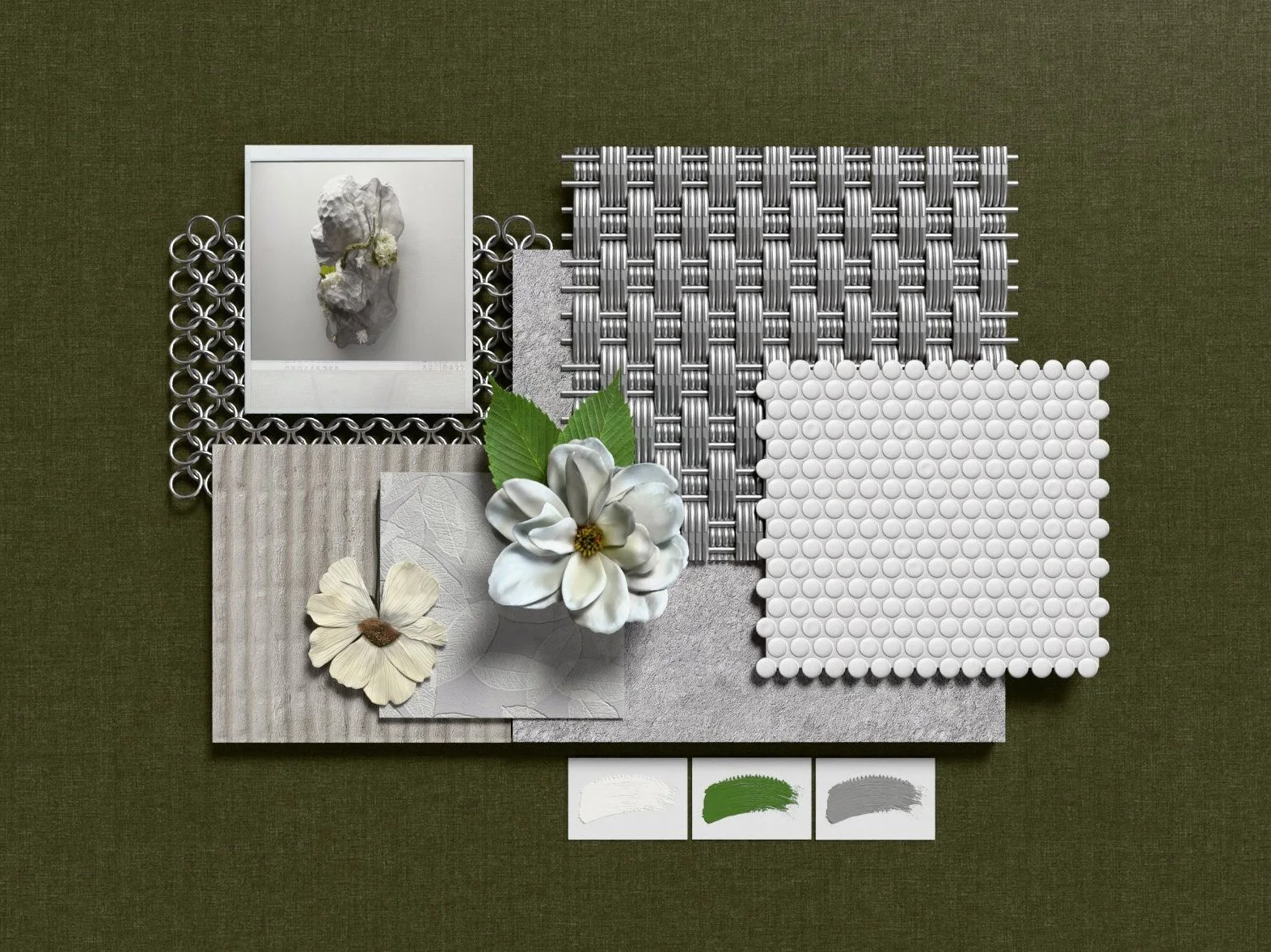
I then created a material board inspired by the given materials and my inspiration board. I experimented with different textures and layers to see how the sculpture could come together. I was especially drawn to the Skeleton Leaves Medium Translucent wallpaper, as its delicate texture reminded me of the organic forms in my inspiration board. I kept the color palette mostly white and gray, with touches of green to bring in the natural element.
The making process was pretty straightforward and experimental. I mostly followed my intuition, playing around with the materials and adjusting the shapes as I went to see what worked.
I started by bending and shaping the chicken wire to create a base form.
I then covered it with plaster bandages, building up the form and creating texture along the way.
Next, I attached the wire mesh, playing with different folds to see how it could wrap around the plaster.
Finally, I added the flowers, following the contours of the mesh to bring everything together.
03 — Making Process
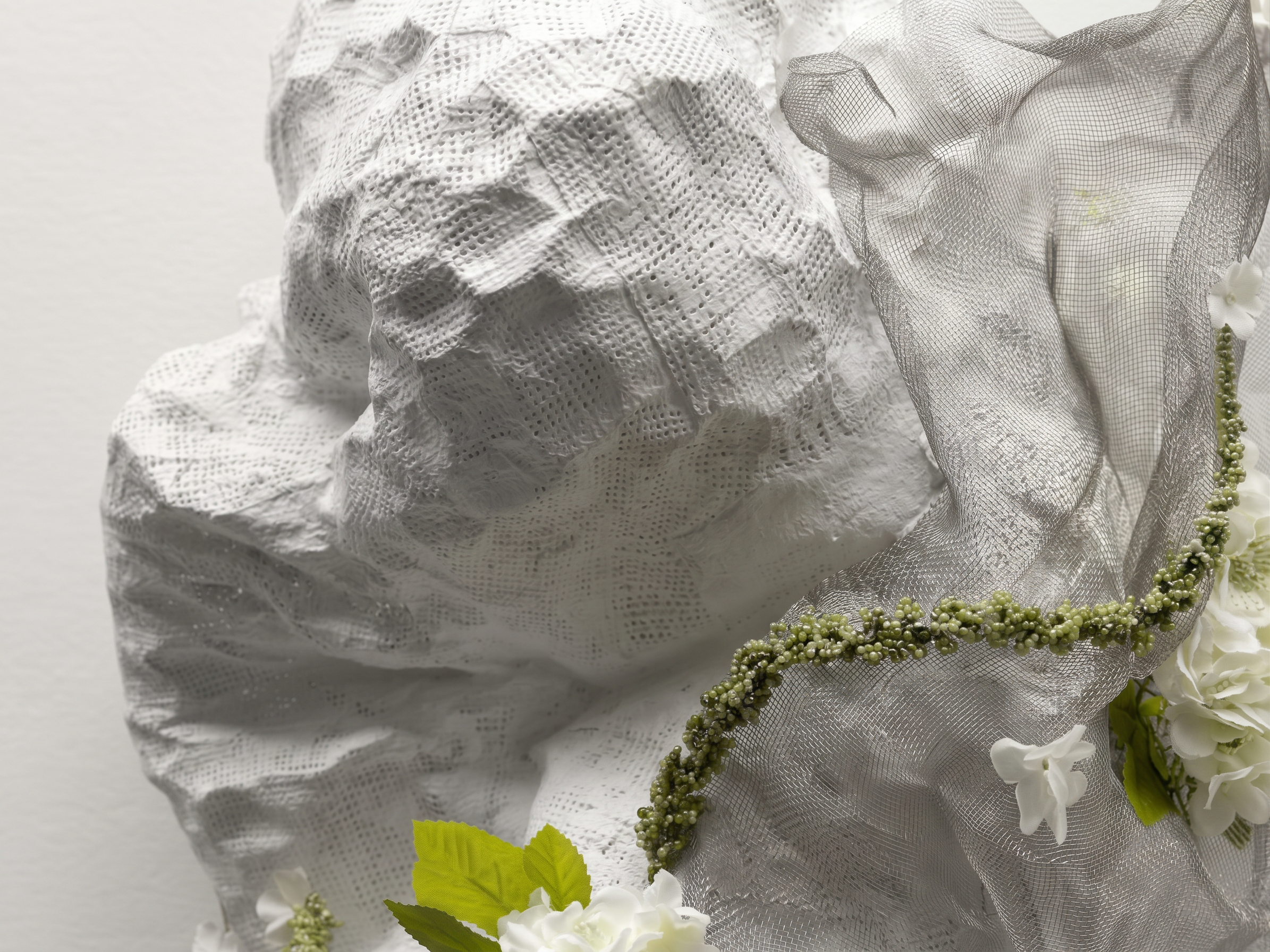
Maker's Decision: As I layered the plaster bandage strips, I intentionally left the surface uneven to keep the texture of the bandages visible. Instead of smoothing everything out, I wanted to highlight the material’s qualities and let the rough texture add another layer of depth to the sculpture.
As beautiful as this project turned out, it also brought me a lot of frustration. Cutting the chicken wire was probably the worst part. The number of tiny cuts I got was insane, but I guess each one is a little reminder of the experience.
Despite all that, I really loved working on this project. It taught me a lot about exploring form, from building a basic skeleton to layering materials over it to create the final shape. I especially enjoyed experimenting with the different qualities of each material and figuring out how to bring them together into one cohesive form.
04 — Reflection